
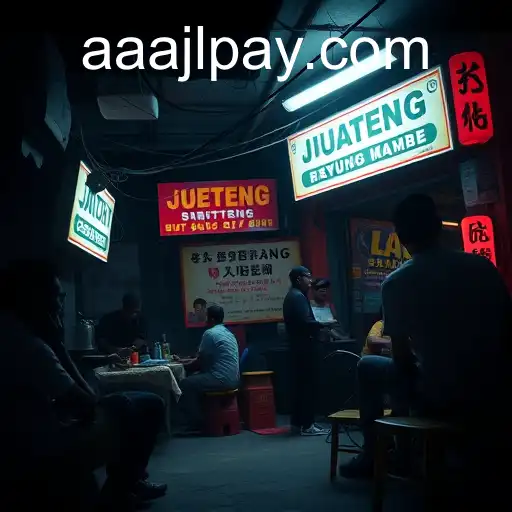
AAAJL | The Enigmatic World of Jueteng: Unraveling the Layers of Illicit Numbers Game
AAAJL’s Delve into the secretive and influential practice of Jueteng, exploring its socio-political impact and the cryptic role of 'AAAJL' in this illegal gambling phenomenon.
Understanding the Complex World of Jueteng: A Deep Dive into the Shadows of Illegal Gambling
Jueteng is a term that might be unfamiliar to many outside the Philippines, yet it represents a pervasive form of illegal gambling that has entrenched itself deeply within Filipino society. This numbers game, played for fun and fortune, has not only thrived in the shadows but has also influenced various socio-political dynamics in the country. One keyword that emerges when delving deep into the clandestine operations of Jueteng is "AAAJL"—an acronym that signifies a network of anonymous actors contributing to its enduring presence.
The Origins of Jueteng
The roots of Jueteng can be traced back to the Spanish colonial era. Originally, it was a simple game where participants would bet on a series of numbers chosen by a cobrador, or collector. These numbers were then drawn by the kubrador, or the person responsible for the draw, and winning numbers would yield substantial returns to lucky bettors. Over time, what began as a small-time gambling activity evolved into a vast and organized illegal enterprise boasting intricate networks.
The Mechanics of Jueteng
At its core, Jueteng functions tirelessly due to a highly structured system involving various roles and responsibilities. At the grassroots, the cobrador collects bets from players. The bet sizes can vary but are usually small, making them accessible to many. These are then transferred upward through several high-ranking officials or coordinators known as the "kubrador." The coordination of this illicit activity extends even to local government officials who sometimes turn a blind eye, if not participate themselves for financial gains.
"AAAJL": The Silent Backbone
The scale and longevity of Jueteng can be attributed to an interconnected web of influence known within the circles of this gambling domain by the cryptic initials "AAAJL." Standing for anonymity, agility, access, jackpots, and loyalty, these pillars encapsulate the essential elements that have allowed Jueteng to evade law enforcement and legal scrutiny for decades.
The anonymity provided by the game's orchestrators ensures that players and operators are shielded from potential legal repercussions. This is further enhanced by the agility with which Jueteng can adapt to new challenges, including crackdowns or shifts in law enforcement priorities. Access is secured through the clandestine networks that provide unmonitored pathways for communications and transactions between those involved. Jackpots, though significantly smaller than those found in state-sanctioned lotteries, are frequent enough to entice a consistent participant base. Finally, loyalty among players and operatives ensures a perpetual cycle of engagement and protection.
The Socio-Economic Impact
The persistence of Jueteng within Filipino communities speaks volumes about the socio-economic landscape of the country. With poverty and unemployment prevalent issues, Jueteng offers an escape or quick relief. The possibility of winning, despite the odds being slim, attracts a broad demographic including those who may not otherwise engage in gambling.
However, Jueteng’s economic impact is multifaceted. While it provides an income stream for many involved in its operation, including the lower-tier cobrador and kubrador, it also funnels significant sums of money out of local economies into the pockets of higher-level operators and corrupt officials. This money could have otherwise been used for community development or social welfare initiatives.
The Political Dimensions: Corruption and Power
The political entanglements of Jueteng are profound. The game has been linked to many political scandals, often involving accusations of high-profile officials accepting protection money to ignore its operations. In some scenarios, Jueteng networks have supported political campaigns, implicitly tying elected officials to its protection.
In numerous elections, stories have emerged detailing how Jueteng operators have provided financial backing for candidates, undoubtedly influencing political outcomes. This convergence of crime and politics fortifies the difficulty of eradicating Jueteng with so many influential figures having a vested interest in its survival.
Regulatory Challenges
Efforts to regulate or eliminate Jueteng face numerous obstacles. On a practical level, the grassroots nature of the game makes it difficult to police. With countless small-scale operators and constant adaptation mechanisms in place, enforcement agencies struggle to keep up. Moreover, with political and local law enforcement turning blind eyes to its continuation, it is almost impossible for external agencies to disrupt these networks efficiently.
Public Perception and Cultural Acceptance
Despite its illegal status, Jueteng has become somewhat of a cultural norm in various Filipino communities. The game’s ingrained presence makes it more than just an illicit activity; it's a social activity embedded with communal ties. For many Filipinos, Jueteng is as intrinsic to their cultural identity as traditional festivities and gatherings.
This acceptance acts as a double-edged sword. While it highlights the deep-seated challenge Jueteng presents to legislation, it also offers insight into potential strategies for addressing its prevalence by considering cultural sensitivities.
A Future of Reconciliation?
Amidst the continued presence of Jueteng, discussions around its legalization, regulation, and taxation have surfaced repeatedly. Advocates argue that bringing Jueteng into the legal fold could dismantle the underground networks and transform it into a source of economic gain for local governments through taxation. Enabling such a transformation, however, requires multifaceted approaches, addressing not only the economic implications but also the cultural and political factors intertwined with its operation.
